
Please note: This website contains affiliate links. As an Amazon Associate, we earn from qualifying purchases at no additional cost to you. Learn more.
It’s Not Just What You Bring — It’s How You Connect
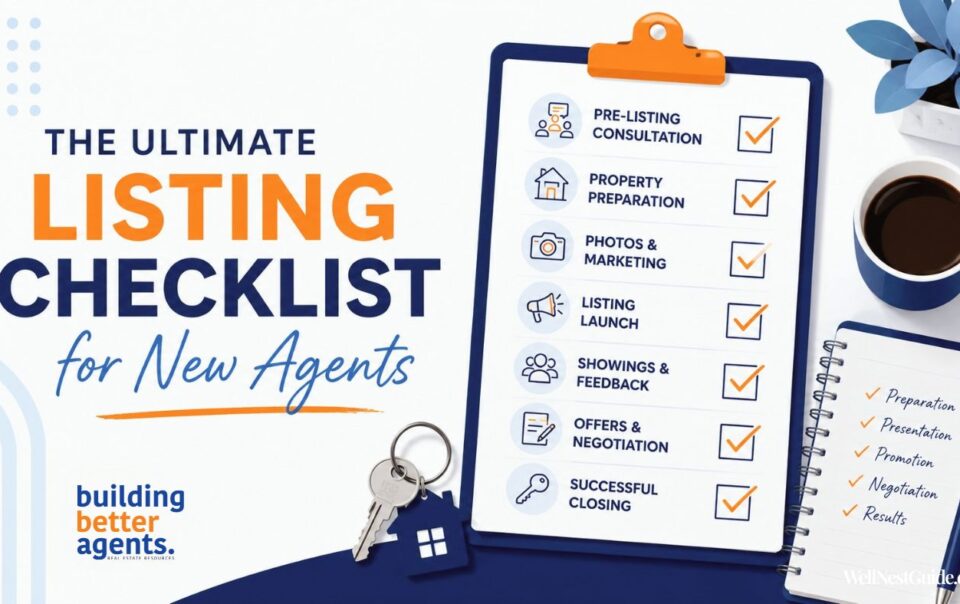
If you’re looking for the actual checklist — the CMA, the marketing plan, the paperwork — check out our guide on Must-Have Items in Your Listing Presentation. This article is about something you can’t put in a folder: the few minutes at the start of the appointment that decide whether the seller trusts a word you say for the rest of it.
Start With F.O.R.D., Not With Business
Before you open your laptop or pull out a single flyer, spend a few genuine minutes getting to know the person sitting across from you. A simple framework worth memorizing is F.O.R.D.:
- Family — “How long have you all lived here? Did you raise your kids in this house?”
- Occupation — “What do you do for work? Is the move related to your job at all?”
- Recreation — “What do you love doing on the weekends? Anything you’ll miss about this neighborhood?”
- Dreams — “What does the next chapter look like for you? What are you most excited about with this move?”
This isn’t small talk for its own sake. You’re gathering the exact information that tells you how to actually sell this home (what made them fall in love with it in the first place is usually what will sell it to the next family too), and you’re doing the much more important work of becoming a person they trust instead of a stranger with a clipboard.
Why This Matters Most When the Pricing Conversation Gets Hard
Here’s where rapport actually earns its keep. Picture this: the seller is convinced their home is worth $750,000. Your CMA says $699,000. That’s a real gap, and it’s one of the most uncomfortable moments in this job.
If you walk in, shake hands, and deliver that number in the first five minutes, you’re just a stranger telling them they’re wrong about something deeply personal. But if you’ve spent the first part of the appointment genuinely connecting — asking about their family, understanding why this home matters to them, showing that you actually listened — that same number lands completely differently. It’s no longer a stranger second-guessing them. It’s someone they’ve started to trust, backing up a number with real market data.
They’re far more likely to ask genuine follow-up questions instead of getting defensive, and to believe that your number comes from real knowledge of the market, not from wanting an easy, fast sale. Trust doesn’t make a hard number easy to hear. It makes it possible to actually hear.
Read the Room
Not every seller wants the same experience. Some are analytical and want every step of the process explained in detail before they’ll feel comfortable moving forward. Others just want the bottom line: what will it sell for, how long will it take, and what do they need to sign. Plenty are emotional about leaving a home they’ve built a life in, even if they’re excited about what’s next.
Pay attention to which kind of person is sitting across from you and adjust your pace and tone accordingly, rather than delivering the exact same script to everyone. The questions from the F.O.R.D. framework above will usually tell you which type you’re dealing with within the first few minutes.
Give Them a Reason to Remember You
Somewhere in your presentation, work in at least one or two things that genuinely set you apart from every other agent they might interview. Maybe you’re president of the neighborhood association. Maybe you host a local real estate podcast or have a background in interior design. Whatever it is, say it plainly — sellers are quietly comparing every agent they meet with, and a specific, memorable detail does more work than another generic promise to “work hard for you.”
Frequently Asked Questions
What if the seller’s price expectation is way higher than my CMA?
Build the rapport first, then let the data do the talking. Walk them through your actual comps rather than just stating your number, and ask what they think justifies a higher price — sometimes it’s tied to what they need to net for their next purchase, not the market itself. The trust you build early is what makes them willing to actually hear this conversation instead of shutting down.
How do I build rapport quickly when I only have 30 to 40 minutes for the whole appointment?
You don’t need 20 minutes of small talk — five genuine minutes using the F.O.R.D. framework is usually enough. The goal isn’t a long conversation, it’s a real one; one specific, well-asked question usually builds more trust than ten generic ones.
What if the seller isn’t interested in small talk and just wants to get to business?
Read that cue and respect it — some sellers genuinely just want the bottom line, and pushing rapport-building on someone who doesn’t want it can backfire. You can still build trust quickly by being direct, transparent about your process, and clear about why you’re recommending what you’re recommending.
Should I still use F.O.R.D. if I already know the seller personally?
Not literally, but the underlying idea still applies: take a few minutes to reconnect as people before shifting into business mode, rather than jumping straight to the CMA just because you already know each other. Existing trust is a head start, not a reason to skip the human part of the appointment.
Editor’s note: This article was created by Kerry Lucasse, Agent/Owner at eXp Realty. Information deemed reliable but is subject to change.
Ready to get more from your brokerage? Learn why agents voted eXp Realty Top Place to Work!
Please note: This website contains affiliate links. As an Amazon Associate, we earn from qualifying purchases at no additional cost to you. Learn more.